
Hello students! 👋
I'm Dr. Punit Bhojani, the OG GURU, here with a single-point agenda — to make OBGY your most favorite and most scoring subject.
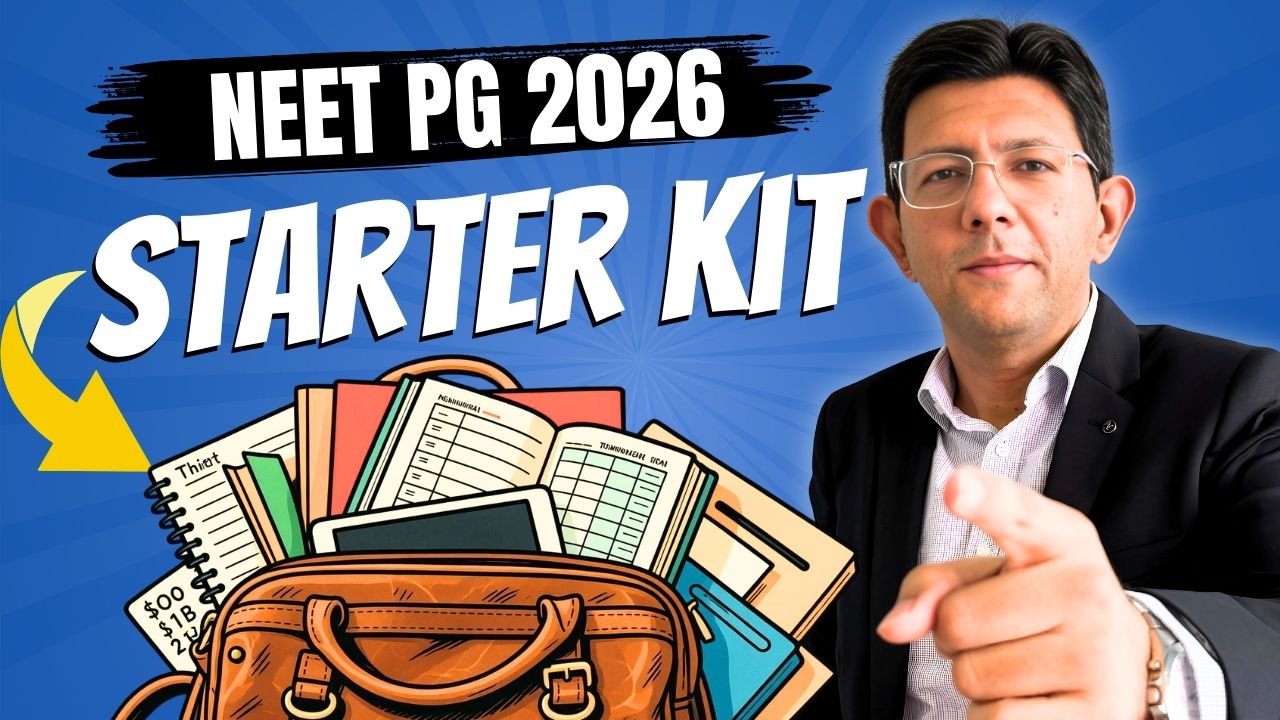
With the NEET PG 2026 tentatively announced for August 30th, we have roughly 6 months remaining. In this post, I will give you a detailed 6-month strategy, covering all 19 subjects, how many Grand Tests (GTs) to give, and how to boost your score to reach your dream rank.
🚀 Start Now: Avoid These Crucial Mistakes in NEET PG Preparation
- Do Not Panic: Whether you are an intern or taking a second attempt, start your preparation right away. If you have been going slow, now is the time to boost your pace.
- Avoid Jumping Straight to Grand Tests: Many students make the mistake of attempting GTs before building a foundation. You should wait until you have established your core concepts.
- Detailed Lectures Over Rapid Revision (RR): Do not start with RR topics for main subjects. This is a concept-based exam; you need #crystalclearconcepts to tackle clinical cases and Image-Based Questions (IBQs).
- Don't Skip Subjects: Do not skip any subject completely, not even the short ones. Every mark is vital for your final rank.
- Don't Start with Medicine: Medicine is massive. If you start there, you risk wasting time and getting frustrated.
📚 The 180-Day NEET PG Strategy: Your Path to Success
This strategy is divided into three critical phases, including one main reading and two thorough revisions.
🔸 Phase 1: Conceptual Building (3 Months)
This is the most important "make or break" phase that decides your rank.
- Focus: Detailed theory lectures and notes.
- Study Time: Aim for 10–12 hours daily.
- Theory-MCQ Ratio: 75% Theory and 25% MCQs.
- Grand Tests: Attempt roughly 3 GTs during this phase, starting after the first 30–40 days.
🔸 Phase 2: First Revision (2 Months)
- Focus: Shifting heavily toward MCQs and Previous Year Questions (PYQs).
- Theory-MCQ Ratio: 75% MCQs and 25% Theory (focusing only on your weaker topics).
- Grand Tests: Aim for 4 GTs (one every 15 days).
🔸 Phase 3: Final Revision (1 Month)
- Focus: 100% MCQ-based. Focus on clinical MCQs, IBQs, and highly repeated topics.
- Grand Tests: 3 GTs in the final month, bringing the total to 10 Grand Tests over 6 months.
📝 Subject Strategy and Time Allocation
The schedule is based on the weightage of marks, not just the length of the subject.
The Big Four Subjects (8 Days Each)
These provide approximately 80–100 MCQs (40-50% of the paper).
- Medicine (20-25 MCQs)
- Surgery (20-25 MCQs)
- OBGY (20-22 MCQs) — Your Game Changer!
- PSM (15-20 MCQs)
Core Subjects (7 Days Each)
- Pathology, Pharmacology, Microbiology.
Basic & Scoring Subjects
- Anatomy, Physio, Biochem: 5 days each (volatile, kept toward the end).
- Radiology, ENT, Ophthalmology, Forensic: 2–3 days each (highly scoring).
- Short Subjects: 1 day each (Pediatrics, Ortho, Psych, Anesthesia, Skin).
🛠 Tool 1: The Medicine Shortcut
Do not start Medicine directly. Finish Pathology, Microbiology, Pharmacology, Radiology, and Physiology first. By doing this, 70–75% of your Medicine is already completed.
🛠 Tool 2: Mix and Merge
Do not study one subject for 7 days straight—you will get bored. Mix and merge 3–4 subjects (e.g., half a day of Pathology and half a day of OBGY) to keep your mind fresh.
🛠 Tool 3: OBGY as the Rank Decider
OBGY offers the highest return on investment. While 8 days are allocated, you can master the entire subject in just 5 days using my masterclass lectures. This allows you to save 3 days for more difficult subjects.
🎯 Optimizing Your Strategy: Boosting GT Scores with ARC
After every GT, you must analyze your mistakes using the ARC method:
- A – Attention Failure: Silly mistakes from not reading the question correctly.
- R – Recall Failure: You read it but forgot. Immediately make a note in your "Book of Errors".
- C – Concept Failure: The most dangerous. You don't know the underlying principle. You must go back to your videos and notes to build the concept from scratch.
💊 Medicine Shortcut: Must-Know Topics
Focus on these high-yield areas first:
- Cardiology: ECG, MI, RHD, Heart Failure.
- Neurology: Stroke, Epilepsy, Meningitis.
- Respiratory: TB, COPD, Pneumonia, ABG analysis.
- Others: Rheumatology (SLE/RA), Infectious diseases (Malaria, Dengue), Endocrinology (Diabetes), Nephrology.
💪 Final Words: Mental Health and Positive Thinking
Take care of your health. Sleep 6–7 hours and practice 15 minutes of yoga or meditation daily. Spend 5 minutes before bed visualizing your success: imagine yourself getting your dream rank and entering your dream residency. Positive thinking works.
📲 Download the OGGURU App Today!
Enroll in the NEET PG 6-Month Masterclass for only ₹1750 (use code LAUNCH30). Get conceptual theory lectures, MCQ discussions, beautiful handwritten integrated notes, and my personalized guidance.
Download the OGGURU App Today!
Enroll in the NEET PG 6-Month Masterclass for only ₹1750 (use code LAUNCH30). Get conceptual theory lectures, MCQ discussions, beautiful handwritten integrated notes, and my personalized guidance.
📲 Download the OGGURU App Today!
👉 Android App 👉 iOS App
📆 Get personalized timetable & guidance from Dr. Punit Bhojani — 📱 WhatsApp: 9404634654
❤ Connect with OGGuru
👉 YouTube: @OGGuruBhojani 👉 Instagram: @OGGuruBhojani 👉 Telegram: @OGGuruBhojani